
Paint-Techs LLC — Jacksonville's Trusted Painters
Licensed & insured painting contractor with 52 five-star Google reviews. Serving Jacksonville, Nocatee, Ponte Vedra Beach, and Northeast Florida since 2020.
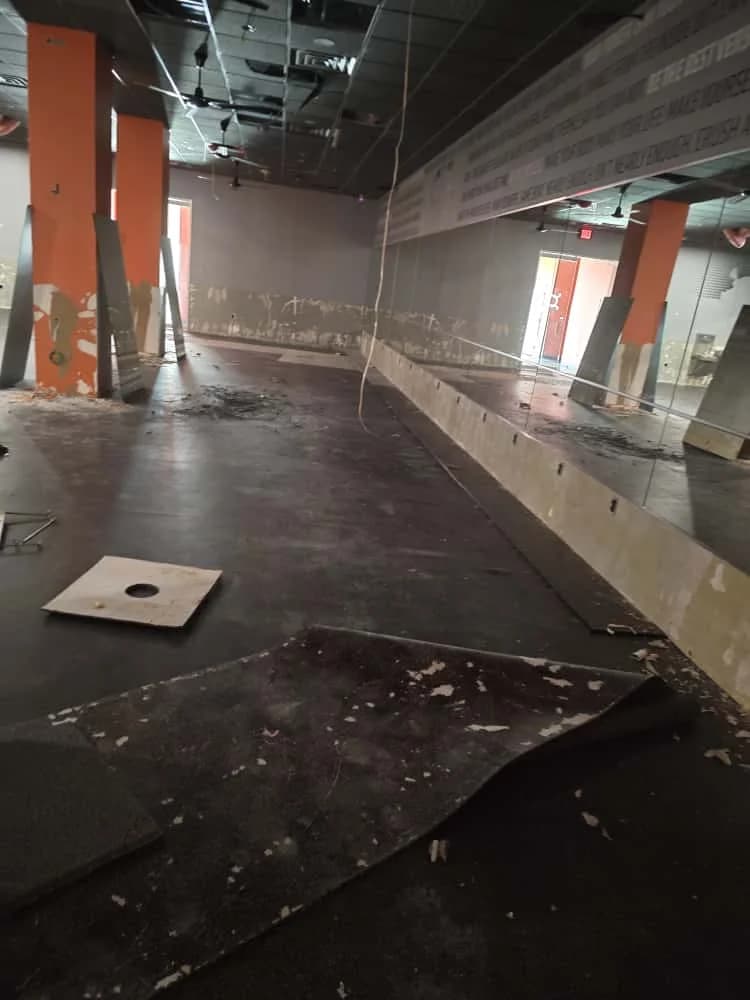
Tenant improvement vs. ground-up remodel: know which one you are actually doing
Most commercial buildouts are tenant improvements (TI), not ground-up remodels. In a TI, the landlord usually owns the shell and core, structure, roof, and main HVAC, and the tenant funds and manages everything inside the lease line: partition walls, finishes, fixtures, and paint. Landlords in Jacksonville commonly offer a TI allowance of $20 to $50 per square foot for a basic office buildout in a previously occupied space, and $40 to $75 per square foot for a raw, unfinished shell. Anything your buildout costs above that allowance comes out of your budget, not the landlord's.
A ground-up remodel of a building you own works differently. There is no landlord allowance to offset costs, but you also have full control over structural changes, layout, and long-term finish decisions without lease restrictions. Know which category your project falls into before you price anything, because it changes who approves your scope and who is paying for what.
Budget by square foot, then add for occupied-space work
General office buildouts in Jacksonville typically run $60 to $150 per square foot depending on finish level, retail buildouts run $50 to $120 per square foot, and restaurant buildouts with commercial kitchen equipment run $150 to $350 per square foot. Layer a commercial repaint on top and budget $1.50 to $4 per square foot depending on ceiling height, coating system, and how many colors and logo walls are involved.
Occupied-space work, remodeling around a business that stays open, typically costs 15 to 30 percent more than the same scope in a vacant space, because crews work nights, weekends, or in small phased zones instead of running a full crew for eight straight hours. Budget for that premium up front instead of being surprised by it in a change order.
Permits and the certificate of occupancy
Structural changes, electrical, plumbing, and HVAC rework, and any change of use (a retail space becoming a restaurant, for example) all require permits through the City of Jacksonville Building Inspection Division, and a change of use typically requires a new certificate of occupancy before you can open. Cosmetic work like painting, flooring, and fixture swaps inside an existing use classification usually does not trigger a new CO, but it is worth confirming with the building department before you assume.
Commercial permitting in Jacksonville generally takes longer than residential. Plan for 2 to 6 weeks depending on scope and how busy the department is, and build that into your opening-day timeline rather than treating it as a formality at the end.
ADA compliance triggers most business owners miss
Under the 2010 ADA Standards for Accessible Design, an alteration to a primary function area of a commercial space generally has to bring the accessible route to that area, entrances, restrooms, and the path connecting them, up to current standards to the extent it is readily achievable, even if the remodel itself is only cosmetic. Restroom renovations, front counter changes, and entryway work are the most common places this gets missed, and retrofitting for compliance after the fact costs far more than designing for it during the original scope.
Loop your architect or general contractor in on ADA review before finishes are selected, not after, especially for restroom and entrance work.
Staying open during construction
Phased occupancy, closing and finishing one section of a space while the rest stays open to customers or staff, is how most Jacksonville retail, office, and restaurant remodels avoid a full shutdown. Temporary partition walls, dedicated contractor entrances, and HVAC isolation for dust control all make phased work possible without shutting the doors.
Painting is usually the easiest trade to run around business hours because it can happen entirely at night or over a weekend using fast-dry, low-VOC coatings that clear odor before the morning shift arrives. We cover the exact scheduling approach in how we repaint commercial buildings without closing, including how a phased, after-hours schedule keeps a multi-tenant building open through a full repaint.
Need Help With Your Painting Project?
Paint-Techs LLC offers free estimates for all painting services in Jacksonville and Northeast Florida.
Debris removal on a commercial timeline
Commercial demo moves fast and generates volume: dropped ceiling tile, old flooring, partition framing, and fixtures can fill a 30- or 40-yard roll-off in the first few days of a mid-size buildout. Ordering a commercial-scale dumpster from a trusted dumpster rental in Jacksonville, Fl before demo starts, sized for the square footage and scope rather than guessing low, keeps the job site clear enough for other trades to keep working around it instead of waiting on debris removal.
For a business staying open during the work, schedule dumpster swaps for early morning or after close, the same way you would schedule any other disruptive trade, so a truck in the parking lot is never blocking customer access during business hours.
Vendor coordination, insurance, and lien waivers
A commercial remodel usually involves more subcontractors running in parallel than a home remodel. Electrical, plumbing, HVAC, flooring, millwork, and painting can all be on site in the same week, and a missed handoff between any two of them is the most common cause of a blown schedule. Confirm a single point of contact, either your general contractor or your own project manager, who tracks the sequence and flags conflicts before they become delays.
Every subcontractor on a commercial job should carry general liability insurance and provide a certificate of insurance naming the property owner or tenant as an additional insured before work starts. This protects you if a trade damages existing finishes, the building envelope, or a neighboring tenant's space during the buildout.
Lien waivers matter just as much as insurance. Florida's construction lien law allows subcontractors and suppliers who are not paid to file a claim against the property itself, even if the general contractor was paid in full. Collecting a signed lien waiver from each vendor as they are paid, and a final waiver at project completion, protects the property owner from a lien surfacing months after the remodel is finished and everyone has moved on to the next job.
Why commercial painting contractors go last, and why that works in your favor
Paint is scheduled after flooring, fixtures, millwork, and equipment installation for the same reason it goes last in a home remodel: every other trade has the potential to scuff, drip on, or damage a finished paint job, and the reverse is rarely true. Scheduling commercial painting last also means your final walkthrough, brand color matching, logo walls, accent colors, is one of the last things that happens before you open, which is a useful checkpoint for catching anything else that needs a touch-up.
Paint-Techs LLC, run in-house by owner Vitor rather than a rotating subcontractor crew, builds commercial schedules around a business's actual operating hours from the first estimate, not as an afterthought once the rest of the buildout is already behind schedule.
Call Paint-Techs LLC for a free painting quote in Jacksonville to get commercial painting on your remodel calendar early, especially if the work has to happen around business hours.
Frequently asked questions
How long does a commercial remodel take?
A single-suite office or retail buildout typically takes 6 to 12 weeks from permit approval to opening, while a restaurant buildout with kitchen equipment and a change of use often runs 3 to 6 months. Permitting timelines, occupied-space phasing, and equipment lead times are the most common causes of delay beyond the construction work itself.
Do commercial remodels require a certificate of occupancy?
A new certificate of occupancy is typically required when a space changes use, such as retail converting to a restaurant, or when structural, electrical, plumbing, or HVAC systems are significantly altered. Cosmetic updates like painting, flooring, or fixture swaps inside the same use classification usually do not trigger a new CO, but confirming with the City of Jacksonville Building Inspection Division before assuming is worth the phone call.
Can commercial painting happen while the business stays open?
Yes. Commercial painting is one of the easiest trades to schedule around business hours because crews can work nights or weekends using fast-dry, low-VOC coatings that clear odor before the next shift or opening. Phased painting, one section or floor at a time, lets the rest of the business keep operating normally throughout the project.
What is the difference between a commercial remodel and a tenant improvement?
A tenant improvement (TI) is a buildout inside a leased space, usually funded partly by a landlord allowance of $20 to $75 per square foot, where the tenant finishes everything inside the lease line. A commercial remodel of a building you own has no landlord allowance to offset costs but gives you full control over structural changes and long-term finish decisions without lease restrictions.
Frequently asked questions
How long does a commercial remodel take?
A single-suite office or retail buildout typically takes 6 to 12 weeks from permit approval to opening, while a restaurant buildout with kitchen equipment and a change of use often runs 3 to 6 months. Permitting timelines, occupied-space phasing, and equipment lead times are the most common causes of delay beyond the construction work itself.
Do commercial remodels require a certificate of occupancy?
A new certificate of occupancy is typically required when a space changes use, such as retail converting to a restaurant, or when structural, electrical, plumbing, or HVAC systems are significantly altered. Cosmetic updates like painting, flooring, or fixture swaps inside the same use classification usually do not trigger a new CO, but confirming with the City of Jacksonville Building Inspection Division before assuming is worth the phone call.
Can commercial painting happen while the business stays open?
Yes. Commercial painting is one of the easiest trades to schedule around business hours because crews can work nights or weekends using fast-dry, low-VOC coatings that clear odor before the next shift or opening. Phased painting, one section or floor at a time, lets the rest of the business keep operating normally throughout the project.
What is the difference between a commercial remodel and a tenant improvement?
A tenant improvement (TI) is a buildout inside a leased space, usually funded partly by a landlord allowance of $20 to $75 per square foot, where the tenant finishes everything inside the lease line. A commercial remodel of a building you own has no landlord allowance to offset costs but gives you full control over structural changes and long-term finish decisions without lease restrictions.
Paint-Techs Team
Paint-Techs LLC — Jacksonville, FL
Expert painting advice from the Paint-Techs team. We're a licensed and insured painting contractor serving Jacksonville and Northeast Florida with 52 five-star Google reviews. Our team combines years of hands-on experience with knowledge of Florida's unique climate challenges.