
Paint-Techs LLC — Jacksonville's Trusted Painters
Licensed & insured painting contractor with 52 five-star Google reviews. Serving Jacksonville, Nocatee, Ponte Vedra Beach, and Northeast Florida since 2020.
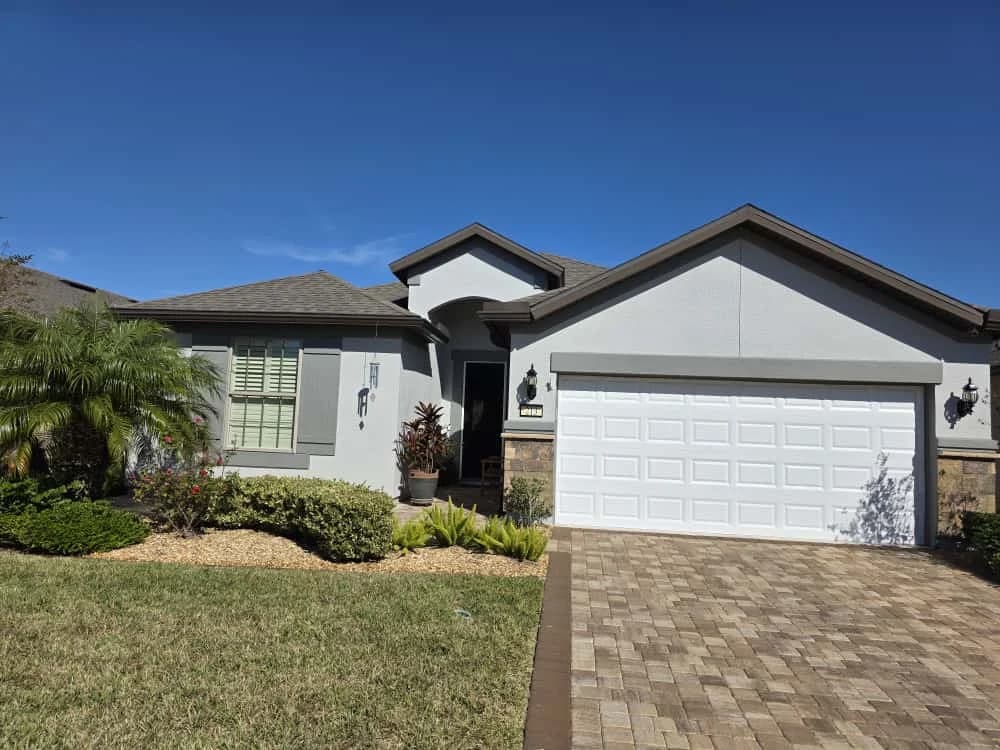
This guide walks you through exactly what Florida does to exterior paint, how a professional crew counters each failure mode, and what the cost-versus-value math looks like for a typical Jacksonville home.
Florida's climate challenges
Florida's environment is particularly harsh on exterior surfaces. Four forces work against your paint simultaneously, twelve months a year.
UV Radiation. The intense Florida sun breaks down paint at the molecular level, causing fading, chalking, and degradation faster than in northern climates. The same gallon of paint that lasts 12 years in Pennsylvania can degrade to chalking in 5 years on a south-facing wall in Jacksonville. UV breaks down the binders that hold pigment to the substrate, releasing a fine powder you can wipe off with your hand. Once chalking starts, the paint film is functionally compromised even if it still looks intact from across the street.
Humidity. High humidity levels can cause paint to peel, blister, and encourage mold and mildew growth. Florida averages 75 to 85 percent relative humidity year-round. Moisture moving through walls (driven by air conditioning indoors and rain outdoors) gets trapped behind cheap or improperly applied paint and lifts it off in sheets. Mildew also feeds on the surfactants in latex paint, leaving black or green spotting on north-facing walls and shaded eaves within a year of a botched job.
Salt Air. Coastal homes in Jacksonville Beach, Atlantic Beach, Ponte Vedra Beach, and Fernandina Beach face additional challenges from salt-laden air that corrodes surfaces and accelerates paint breakdown. Within one mile of the Atlantic, salt deposits visibly on every exterior surface during onshore wind days. Salt is hygroscopic (it pulls water out of the air), so any wall that doesn't get pressure-washed and properly primed traps a saline film that prevents adhesion and corrodes any exposed metal fastener.
Storm Damage. Hurricane season brings wind-driven rain that can penetrate improperly sealed surfaces. Even tropical storms drive water sideways at velocities that defeat ordinary caulk joints. A pre-storm exterior paint job should include caulk inspection at every window, door, and trim penetration; a post-storm walk should look for new hairline cracks, lifted edges, and water staining around flashing.
The professional difference
While DIY painting might seem cost-effective, professional exterior painting offers significant advantages. The difference shows up not on day one (a freshly-applied DIY job often looks identical to a professional one) but at the 24- and 60-month marks, when the cheap version starts failing visibly.
1. Proper surface preparation
Professional painters know that preparation is the single biggest predictor of how long a paint job lasts. The actual painting takes 20 to 30 percent of total project time; the other 70 to 80 percent is prep. We:
Skipping any of these stages is what causes the early failures you see on neighborhood drive-bys. If you're considering whether to repaint stucco specifically, also read our deep dive on 5 Florida stucco painting mistakes that will peel your paint, since stucco prep deviates from wood and fiber-cement prep in important ways.
2. Quality materials
We use premium, weather-resistant paints formulated specifically for Florida's climate (see our Sherwin-Williams Duration vs. Emerald breakdown for the two we spec most often). These products offer:
If your siding is vinyl rather than wood, fiber cement, or stucco, the product selection rules are different, since vinyl flexes and reflects heat. See our guide on whether you can paint vinyl siding for the vinyl-specific product list.
3. Expert application
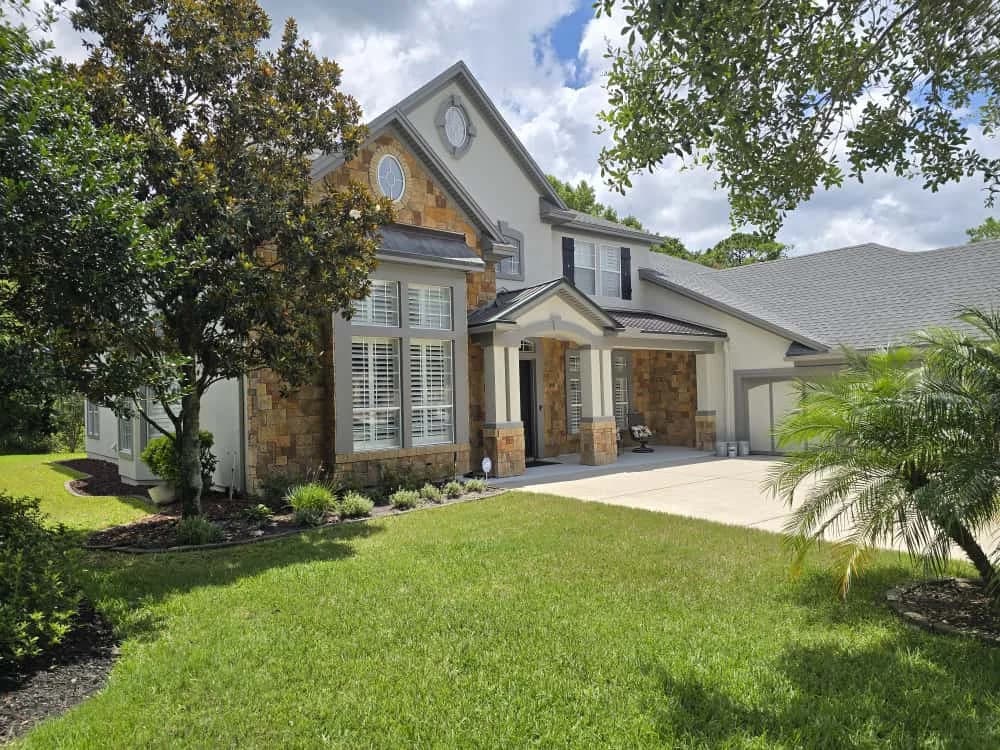
Proper technique matters even when the prep is perfect and the paint is premium. We know:
We work in shade as it travels around the house through the day, which prevents flashing (the difference in sheen between a wet-edge section and a half-dried section) and gives the film a consistent visual quality.
Cost vs. value
Here is the actual math on professional versus DIY exterior painting in Florida.
While professional painting costs more upfront, consider:
For a side-by-side on a different room category, our cabinet painting versus replacement cost comparison walks through the same math for kitchens.
Need Help With Your Painting Project?
Paint-Techs LLC offers free estimates for all painting services in Jacksonville and Northeast Florida.
Signs your exterior needs painting
Watch for these warning signs and address them before they compound:
Florida-specific timing
The best months to paint exteriors in Northeast Florida are October through May, when humidity drops below the 85 percent threshold most paints require and afternoon thunderstorms are less likely. June through September is still workable but requires earlier start times (we typically begin at 7 AM and stop by 1 PM during high summer) to stay ahead of afternoon storms.
Pre-hurricane-season repaints (March through May) are popular because the new caulk and film are at full cure before the first named storm. Post-hurricane-season repaints (October through November) are popular because storm damage is fresh in the homeowner's mind and the air is dry.
Protect your investment
Your Jacksonville home is likely your largest investment. Professional exterior painting protects that investment while enhancing your home's beauty and value, and it's the single highest-ROI maintenance task we recommend to Florida homeowners.
Our exterior crews repaint homes across Jacksonville, Ponte Vedra Beach, Jacksonville Beach, Atlantic Beach, St. Augustine, Nocatee, Fernandina Beach, Middleburg, Orange Park, Yulee, and the rest of our Northeast Florida service area, so the same Florida-tested spec lands on every project regardless of city.
Want to handle the inside at the same time? Our interior painting and cabinet painting teams can be scheduled in parallel so the whole house finishes together.
Frequently asked questions
How often should I repaint my Florida home's exterior?
Every 7 to 10 years for a quality professional repaint on wood or fiber cement; every 8 to 12 years on properly painted stucco. Coastal homes within a mile of the ocean tend to need it 1 to 2 years sooner than inland homes due to salt exposure.
Is power washing enough to clean the exterior before painting?
Power washing handles dirt and surface mildew. It does not handle chalking residue, oxidation, or salt film, all of which require specific cleaning solutions before paint will adhere. Skipping the chemical cleaning step is the most common reason DIY repaints fail.
How long does professional exterior painting take?
3 to 5 working days for a typical single-story 2000-square-foot home with reasonable surface condition. Two-story homes, stucco that needs significant crack repair, or homes with extensive trim work add 1 to 3 days.
Can professional exterior paint really last 12 years in Florida?
Yes, on the right substrate with the right prep and the right product. We have repainted homes after 10 to 12 years where the only failure was around old caulk joints, while the field paint itself was still holding color and bond.
Should I get a written warranty?
Always. A reputable Florida painting contractor stands behind workmanship for 2 to 5 years and behind the manufacturer's paint warranty (typically 10 to 25 years on premium exterior lines). Read what's covered and what's excluded before signing.
Contact Paint-Techs LLC today for a free exterior painting estimate. Let us help protect your home from Florida's challenging climate.
Paint-Techs Team
Paint-Techs LLC — Jacksonville, FL
Expert painting advice from the Paint-Techs team. We're a licensed and insured painting contractor serving Jacksonville and Northeast Florida with 52 five-star Google reviews. Our team combines years of hands-on experience with knowledge of Florida's unique climate challenges.