
Paint-Techs LLC — Jacksonville's Trusted Painters
Licensed & insured painting contractor with 52 five-star Google reviews. Serving Jacksonville, Nocatee, Ponte Vedra Beach, and Northeast Florida since 2020.
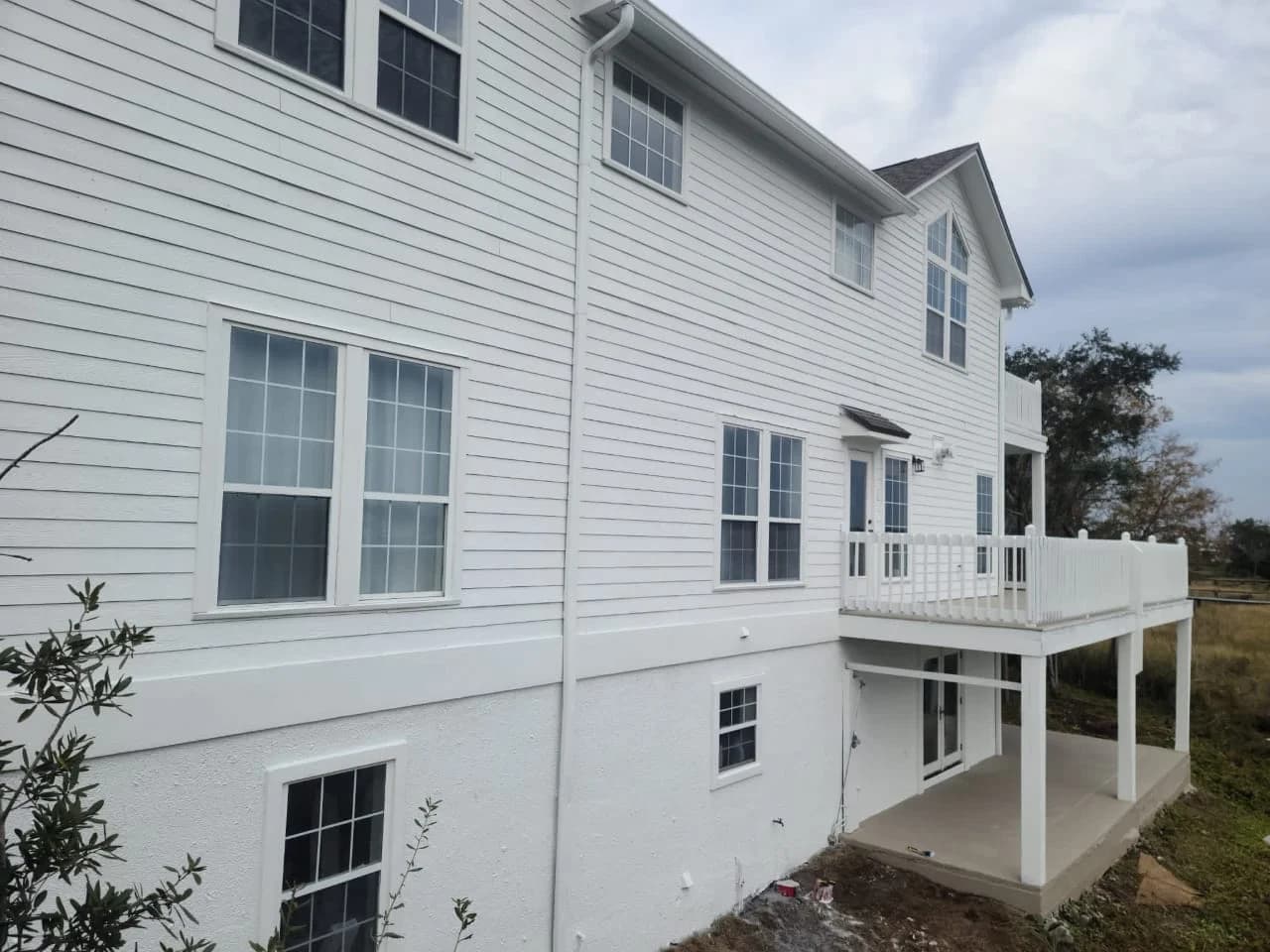
Why humidity and salt air destroy ordinary paint
Three forces attack exterior paint in a coastal climate. Moisture gets behind cheap film and lifts it. Salt crystals work into porous surfaces and break the bond. Intense UV breaks down binders and fades color. Cheap paint has little defense against any of the three, which is why a builder-grade exterior often looks tired in 3 to 5 years here while a quality job holds for over a decade.
The fix is a paint engineered for moisture and sun, plus prep that removes the mildew, chalk, and salt before a drop of paint goes on.
Best exterior paint types ranked
| Paint type | Best for | Typical lifespan | Notes |
|---|---|---|---|
| 100 percent acrylic latex | Most siding types | 8 - 12 years | Breathes, flexes, resists mildew. The default choice. |
| Elastomeric coating | Stucco and masonry | 10 - 15 years | Thick, waterproof, bridges hairline cracks. Wrong for wood. |
| Vinyl-acrylic blend | Budget interior use | 3 - 5 years outside | Cheaper, but underperforms outdoors in humidity. |
| Oil-based (alkyd) | Limited trim use | Varies | Poor moisture tolerance, yellows, slow dry. Mostly outdated for siding. |
For most homes, premium acrylic is the answer. For stucco that has hairline cracking, an elastomeric coating is worth the extra cost. We break down where stucco jobs go wrong in our guide to painting stucco in Florida.
What to look for on the label
You do not need to memorize chemistry to buy well. Scan the label and the product page for these four features.
Mildew and algae resistance
Coastal humidity grows mildew on north-facing and shaded walls. Choose a paint that lists mildew resistance, and ask your contractor about an added mildewcide for problem elevations.
UV and fade resistance
Look for fade-resistant or UV-stable language, and lean toward higher-quality colorants. Deep and bright colors fade fastest, so a slightly lighter shade often ages better.
Breathability and flexibility
Good acrylic lets trapped moisture escape as vapor instead of blistering the film, and it flexes as the wall heats and cools through the day. This is why acrylic beats rigid oil-based paint on siding.
Manufacturer warranty and spec sheet
Premium lines publish detailed application specs. Manufacturer guidance such as the Sherwin-Williams exterior product specifications lists surface prep, temperature windows, and recoat times that the warranty depends on.
Top paint lines worth the upgrade
You are buying years of service, not just a gallon. Premium acrylic lines like Sherwin-Williams Duration and Emerald cost more per gallon but cover better, often in fewer coats, and carry the mildewcides and UV blockers a coastal wall needs. We compare two popular Sherwin-Williams options head to head in our post on Sherwin-Williams Duration vs Emerald so you can see where the extra money goes.
Need Help With Your Painting Project?
Paint-Techs LLC offers free estimates for all painting services in Jacksonville and Northeast Florida.
Prep is half the job
The best paint fails fast over bad prep. A quality exterior job in a humid climate includes pressure washing to strip dirt, chalk, and salt, scraping and sanding any failing paint, treating mildew, caulking gaps, and priming bare or repaired spots. Skipping these steps is the single most common reason a repaint fails early. Our post on the benefits of professional exterior painting covers what a full-prep job includes. Timing matters too: applying paint during the best time of year to paint your house lets each coat cure before moisture reaches it.
Color and finish that age well
Satin or low-sheen finishes are the best all-around choice outdoors because they shed water and resist mildew while still hiding minor surface flaws. Save semi-gloss for trim, doors, and shutters. On color, mid-tone and lighter shades hold up better than deep saturated colors, which fade faster under strong sun.
What is different about painting exteriors in Florida
Florida adds salt air along the coast, daily summer humidity, and some of the strongest UV in the country, so the margin for cutting corners is thinner here than almost anywhere. Homes in beach communities often need salt-rated coatings and more frequent maintenance washing, and many Northeast Florida neighborhoods require HOA color approval before work starts. The combination is why local crews specify premium acrylic and full prep as standard rather than as an upsell.
A simple maintenance routine that adds years
Rinse the exterior once or twice a year to remove salt and mildew spores, especially on shaded walls. Touch up any chips or caulk failures before water gets behind the film. Trim back shrubs that trap moisture against the wall. These small habits routinely add two to three years to an exterior paint job.
Not sure which product or color is right for your siding? Paint-Techs LLC gives free, no-obligation exterior assessments across Jacksonville and Northeast Florida and recommends the right system for your specific walls. Contact us or call (904) 762-7062 to get started.
Frequently asked questions
What type of exterior paint lasts longest in humid weather?
100 percent acrylic latex paint lasts longest in humid weather because it breathes, flexes with temperature swings, and resists mildew far better than oil-based or vinyl-acrylic blends. Premium acrylic lines such as Sherwin-Williams Duration or Emerald are formulated with mildewcides and UV blockers, which is why they commonly last 8 to 12 years on a properly prepped surface.
Is elastomeric paint good for coastal homes?
Elastomeric coating is a strong choice for stucco and masonry on coastal homes because it forms a thick, waterproof, crack-bridging film that blocks wind-driven rain. It is not the right product for wood or fiber cement siding, where a breathable acrylic performs better. Match the coating to the substrate rather than assuming thicker is always better.
What paint finish is best for a humid exterior?
Satin and low-sheen finishes are the best all-around choice for humid exteriors. They shed water and resist mildew better than flat finishes, and they hide surface imperfections better than gloss. Reserve semi-gloss for trim, doors, and shutters, where the harder, easier-to-clean surface is worth the extra shine.
How long does exterior paint last in Florida?
A professional exterior paint job in Florida typically lasts 8 to 12 years with quality acrylic paint and full prep, versus 3 to 5 years for a DIY or builder-grade job. Salt air, intense UV, and summer humidity are the main factors that shorten paint life, so coastal homes usually sit at the lower end without the right product and maintenance.
Paint-Techs Team
Paint-Techs LLC — Jacksonville, FL
Expert painting advice from the Paint-Techs team. We're a licensed and insured painting contractor serving Jacksonville and Northeast Florida with 52 five-star Google reviews. Our team combines years of hands-on experience with knowledge of Florida's unique climate challenges.